
Power Cord Configurations
NEMA Straight-Blade Power Cords
NEMA Straight-Blade Power Cords
Straight-blade power cords utilize non-locking NEMA plug and receptacle configurations commonly used in commercial and industrial power distribution. Iron Box straight-blade cords are available in 2-, 3-, and 4-wire configurations, supporting amperage ratings from 10A to 60A and voltage ranges from 125V to 277V.
Download our NEMA Configurations here!

NEMA Locking Power Cords
NEMA Locking Power Cords
Locking power cords use NEMA locking plug and receptacle configurations designed to prevent accidental disconnection. Iron Box offers a wide range of NEMA locking power cords, including L5-20, L5-30, L6-20, L6-30, L14-20, L14-30, L15-20, L15-30, L21-20, and L21-30. These cords are available in multiple wire configurations with amperage ratings from 15A to 60A and voltage ratings up to 600V.
Download our NEMA Configurations here!

IEC Data Center Power Cords
IEC Data Center Power Cords
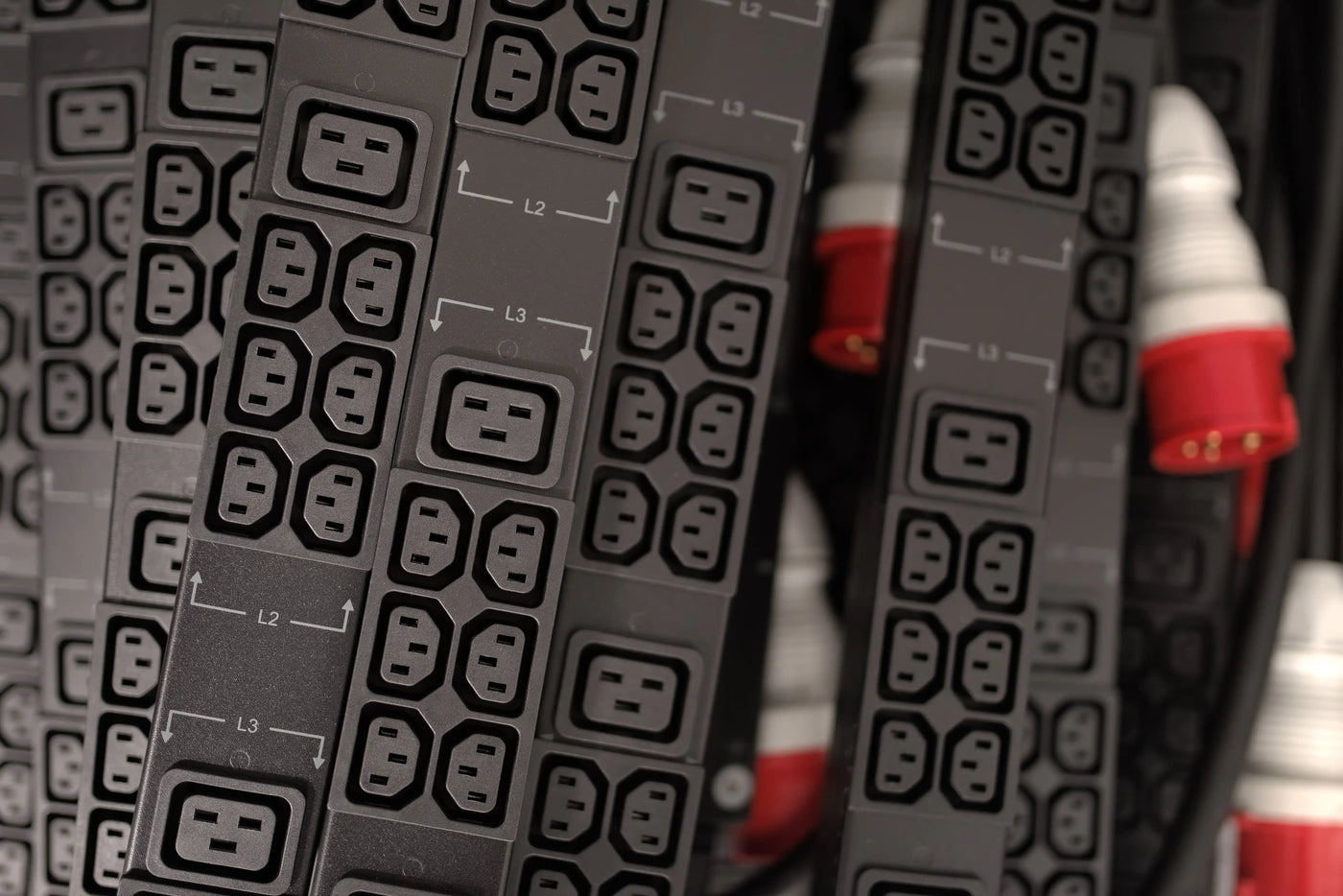
IEC 60320 connectors are widely used for power distribution to servers, network equipment, rack-mounted devices, and consumer electronics. This chart provides a visual and technical reference for common IEC plug and receptacle types, including electrical ratings, conductor configurations, and typical applications.
Download our Iron Box combined catalog here!

Voltage & Amperage
Voltage & Amperage
Voltage
Voltage refers to the electrical potential supplied by the power source. In power cord applications, voltage determines compatibility between the power source, cord, and connected equipment. Common voltage ranges include:
- 125V – Standard single-phase power used for general equipment and consumer electronics
- 250V – Higher-voltage single-phase power commonly used for servers and rack equipment
- 277V / 480V – Three-phase power environments found in data centers and industrial settings
Using the correct voltage is critical — connecting equipment to the wrong voltage can result in damage or failure.
Amperage
Amperage (amps) measures the amount of electrical current the cord and connectors are designed to safely carry. Typical amperage ratings include:
- 10A – 15A – Light-duty and standard equipment loads
- 20A – 30A – Common for servers, PDUs, and rack-mounted equipment
- 50A and higher – High-capacity or three-phase applications. Amperage ratings are determined by connector type, wire gauge (AWG), and number of conductors. Exceeding an amperage rating can cause overheating or premature failure.
Working in Tandem
Voltage and amperage must be considered together when selecting a power cord. In simple terms:
- Higher voltage allows the same amount of power to be delivered using less current
- Higher current requires heavier wire and higher-rated connectors
That’s why specific NEMA and IEC configurations are limited to certain voltage and amperage combinations.
PDU Whips & Data Center Power Basics
What is a PDU whip?
What is a PDU whip?
A PDU whip is a flexible power cable used to connect a facility power source to a rack-mounted Power Distribution Unit (PDU). In data centers, whips are commonly routed beneath raised floors to deliver power safely and efficiently to equipment racks.
PDU whips are built to specific voltage, amperage, phase, and connector requirements, ensuring compatibility with both the upstream power source and downstream equipment.
Raised-Floor Power Basics
Raised-Floor Power Basics
In raised-floor data centers, electrical power is typically distributed below the floor and routed up to equipment racks using whips. This approach allows for:
- Cleaner cable management
- Improved airflow
- Easier reconfiguration as rack layouts change
All under-floor power cabling must meet applicable NEC and UL requirements to ensure safety and compliance.
Single-Phase vs Three-Phase Power
Single-Phase vs Three-Phase Power
Single-phase power is commonly used for smaller loads and individual racks. It is simple, widely supported, and typical in lower-density deployments.
Three-phase power is used in higher-density environments where efficiency and load balancing are critical. It allows more power to be delivered using smaller conductors and is common in modern data centers.
120/208V vs 277/480V
120/208V vs 277/480V
- 120/208V systems are typically used for mixed IT loads and standard rack equipment
- 277/480V systems are common in large facilities where power is stepped down closer to the rack for efficiency
The choice depends on facility design, rack density, and equipment requirements.
Cable & Wire Type Guide
SOOW vs SJOOW vs SJT
SOOW vs SJOOW vs SJT
These designations describe the jacket type and construction of a cable:
- SOOW – Heavy-duty, oil-resistant, flexible cable rated for 600V; common in data center and industrial environments
- SJOOW – Similar flexibility but lighter duty and rated for 300V
- SJT – Lightweight service cord typically used for lower-power applications
The correct jacket type depends on voltage rating, environment, and flexibility requirements.
When to use 300V vs 600V cable
When to use 300V vs 600V cable
- 300V cable is suitable for lower-voltage, lighter-duty applications
- 600V cable is required for higher-voltage systems and is often specified for data center use even when operating below its maximum rating
Using a higher-rated cable can provide added durability and compliance flexibility.
Common AWG sizes and use cases
Common AWG sizes and use cases
AWG (American Wire Gauge) indicates conductor size. Lower numbers mean thicker wire and higher current capacity.
Common examples:
- 12 AWG – 20A applications
- 10 AWG – 30A applications
- 6–8 AWG – High-current or three-phase power
Correct wire-sizing is essential for safety, performance, and UL compliance.
Compliance & Certifications
What “UL-Listed Manufacturer” means
What “UL-Listed Manufacturer” means
Being a UL Listed Manufacturer means cables are produced under a certified quality and testing program. This ensures:
- Consistent construction
- Verified electrical ratings
- Compliance with safety standards
UL listing is often required for data center and commercial installations.
NEC 645.5
NEC 645.5
NEC 645.5 outlines requirements for power distribution in information technology equipment rooms, including raised-floor environments.
It defines:
- Where flexible power cables are permitted
- How they must be constructed
- What safety standards they must meet
Following NEC 645.5 helps ensure both safety and inspection approval.
' Made in USA '
' Made in USA '
Cables manufactured in the U.S. are produced under stricter quality controls, shorter supply chains, and consistent materials sourcing. This often results in faster lead times and more reliable compliance documentation.
